Hills and Hollows: grassland and scrub in eastern Preston
Named for exactly what it is, and the most unusual ground in the city's reserve network.
Hills and Hollows is a grassland and scrub reserve in eastern Preston, and the name is plainly descriptive: the site's undulating ground is the legacy of former workings, and the pits and mounds left behind are what created the habitat.
Disturbed ground of this kind often carries more species than tidier grassland, because the varied levels create wet hollows and dry banks within a few metres of each other. That is the reason the site is managed as a reserve and has never been levelled and mown.
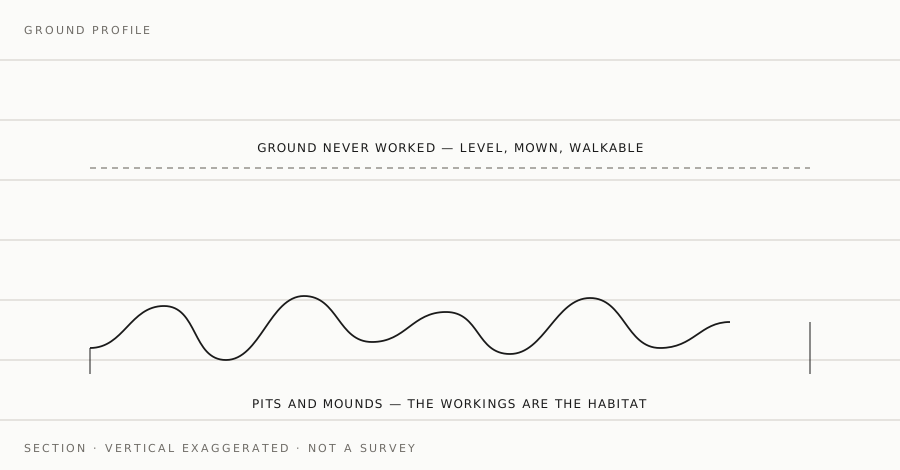
There are no facilities and the paths follow the ground wherever it goes, so the walking is uneven throughout. The nature reserves index sets out the other sites in the eastern group.
Why the reserves are where they are
Ground that was worked and then abandoned is the commonest way an English city ends up with a reserve at all, and this is the clearest local example of it: nobody designed the habitat, the digging did.
Hills and Hollows is grassland and scrub, the only site here that is neither wood nor riverbank, and the name describes the ground honestly: the surface is uneven in a way that indicates it was worked at some point and then left. Rough grassland and scrub is the habitat most often dismissed as waste ground, and it is usually the richest in invertebrates of anything in a city's green network.
Ground conditions, and the seasons
None of these is a surfaced site, and here the ground itself is the obstacle rather than the weather. The pits and mounds left by the workings mean the surface rises and falls continuously, the paths follow it wherever it goes, and there is no level line across the site at all. That is the habitat rather than neglect, and it is the reverse of the municipal parks, which are designed landscape with benches and made paths.
Scrub and grassland change more visibly through the year than woodland does. Between May and August the site is at its densest and least penetrable; in winter the structure of the ground itself becomes readable. Either is worth seeing, but they are not the same visit.
Reaching it from the city
Hills and Hollows sits above the river rather than on it, so the approach is a climb: the riverside path east from Avenham and Miller Parks gets within a few hundred metres, and the last part is uphill on the same uneven ground the reserve is named for.
Rough grassland and scrub is the habitat most often written off as waste ground, and it is usually the richest in invertebrates of anything in a city's green network. That is worth carrying to a site that on first sight looks like nothing much.
Questions about Hills and Hollows
Why is it called Hills and Hollows?
Because the ground undulates: the pits and mounds are the legacy of former workings on the site, and they are what created the habitat.
What habitat does Hills and Hollows have?
Grassland and scrub on disturbed ground. The varied levels put wet hollows and dry banks within a few metres of each other, which supports more species than level grassland would.
Is Hills and Hollows an easy walk?
No. The paths follow the undulating ground wherever it leads, so the walking is uneven throughout, and there are no facilities.